
Fireye Flame Scanner Certifications: ATEX, SIL, and Safety Standards Explained

Fireye flame scanners are critical safety components in burner management systems, ensuring reliable flame detection in industrial boilers, furnaces, and process heaters. Models span several series, including the rugged Phoenix 85UVF and 85IRF, the advanced InSight Series 4 (95S4UV and 95S4IR), the versatile InSight II 95DSS3 family, and classic hazardous-location designs like the 45UV5, 45RM2, and UV7 series. Each series offers different sensing technologies – ultraviolet (UV), infrared (IR), or combined UV/IR detection – tailored for various fuel types, firing conditions, and environmental challenges.
Because these scanners operate in high-temperature, high-risk environments, they must meet stringent safety and performance standards. Common certifications include ATEX and IECEx for explosive atmospheres, SIL 3 safety integrity level ratings for mission-critical systems, and FM, UL, CSA, CE, and UKCA approvals for electrical safety and regulatory compliance. Many models also carry hazardous location ratings such as Class I Division 1 or 2, and NEMA/IP enclosure ratings (NEMA 4X, IP66, IP67) to ensure resistance to dust, water, and corrosion.
These certifications are not just labels – they are proof that a scanner can perform reliably in demanding conditions, protect operators, and meet local and international safety codes. For engineers, safety managers, and procurement teams, understanding these certifications helps ensure that the chosen scanner is both technically suitable and compliant with site-specific regulatory requirements. In this article, we will explore the key certifications available across Fireye flame scanner models, what they mean in practical terms, and how they apply to different series and industrial applications.
Fireye Flame Scanner Series Overview

Fireye produces a wide range of flame scanners designed for different fuels, burner configurations, and environmental conditions. While all models serve the core function of detecting flame presence and signaling burner safety controls, each series offers unique capabilities and physical designs suited to specific industrial needs.
Phoenix Series 2 (85UVF / 85IRF)
The Phoenix Series 2 scanners combine advanced signal processing with rugged, explosion-proof housings. Available in UV and IR versions, they are ideal for hazardous locations and environments requiring ATEX and IECEx certification.
InSight Series 4 (95S4UV / 95S4IR)
The InSight Series 4 scanners integrate flame detection, amplifier, and logic in one unit. They feature on-board diagnostics, multi-spectral sensing, and SIL 3 certification, making them a strong choice for high-integrity safety systems.
InSight II (95DSS3 / 95DSS2)
InSight II scanners offer dual UV/IR sensing for reliable detection in challenging conditions, such as fluctuating flames or variable light interference. Many models in this series carry multiple hazardous location approvals.
Legacy Hazardous-Location Scanners (45UV5, 45RM2)
These proven designs feature explosion-proof housings and are well-suited to retrofit projects or installations with strict environmental protection needs.
Compact UV Series (UV7, UV90)
Compact UV scanners like the UV7 and UV90 are used in less space-constrained environments, offering a straightforward design for dependable UV flame detection in moderate-duty applications.
Key Certifications and What They Mean

Fireye flame scanners are often deployed in environments where safety, compliance, and reliability are non-negotiable. To meet these demands, many models carry one or more internationally recognized certifications. Understanding these certifications is essential when selecting a scanner for your specific application.
ATEX and IECEx
These certifications confirm that a device is safe to operate in explosive atmospheres containing flammable gases or dust. ATEX is primarily recognized in Europe, while IECEx is accepted globally. For flame scanners, this often means explosion-proof housing rated for specific gas groups (e.g., IIC) and temperature classes (e.g., T6).
SIL (Safety Integrity Level)
A SIL rating, such as SIL 3, indicates a device’s ability to perform its safety function under defined conditions. SIL ratings are part of the IEC 61508 standard and are especially important for mission-critical burner management systems.
FM, UL, CSA, CE, UKCA
These mark compliance with electrical safety and performance standards in various regions. FM and UL are widely used in North America, CSA applies in Canada, CE is mandatory in the EU, and UKCA applies in the United Kingdom.
Hazardous Location Ratings
Designations like Class I Division 1/2 or Class II Division 1/2 indicate suitability for environments with specific types of explosive gases, vapors, or dust. These ratings are critical in petrochemical, power generation, and manufacturing facilities.
NEMA and IP Ratings
NEMA (e.g., NEMA 4X) and IP (e.g., IP66, IP67) ratings describe enclosure protection against dust, water, and corrosion. These ratings help ensure scanner longevity in outdoor or washdown areas.
Marine-Grade Construction
Some models feature corrosion-resistant materials and finishes designed for offshore platforms or coastal installations.
| Series / Model Range | Detection Type | Sample Part Numbers | Hazardous-Location / Enclosure Markings | Agency Approvals / Notes |
|---|---|---|---|---|
| InSight 95DSS2 (Expanded) | Dual UV/IR | 95DSS2-1 | NEMA 4XIP66Class I, Div 2, Groups A–DClass II, Div 2, Groups F–G | UL c/USFM No ATEX on -1 variant |
| InSight 95DSS2 (Expanded, cable) | Dual UV/IR | 95DSS2-1CG | NEMA 4XIP66Class I, Div 2 | UL c/USFM No ATEX |
| InSight 95DSS2 “E” (Zone 2) | Dual UV/IR | 95DSS2E-1 | II 3G/D Ex nA IIC T6NEMA 4XIP66 | CE Zone-2 compliant; typically no UL/FM on E variant |
| InSight 95DSS2 (Flame-proof) | Dual UV/IR | 95DSS2-1CEX | ATEX Ex d IIC T6IP66 | CEX housing provides flame-proof ATEX; CE depends on exact “E-CEX” variant |
| InSight II 95DSS3 (standard) | Dual UV/IR | 95DSS3-1 | II 3G Ex ec nC IIC T4 GcII 3D Ex tc IIIC T135°C DcNEMA 4XIP66/IP67 | UL c/USFMCEUKCAEAC/InMetro |
| InSight II 95DSS3 (flame-proof) | Dual UV/IR | 95DSS3-1CEX, 95DSS3-1WICEX, 95DSS3-1CEX-2, 95DSS3-1CEXSS | II 2G Ex db IIC T6II 2D Ex tb IIIC T85°CIP66 | Global approvals set typically includes CE and regional marks |
| InSight Series 4 (standard) | UV or IR | 95UVS4-1, 95IRS4-1, 95UVS4-2, 95IRS4-2 | II 3G Ex ic ec nC IIC T5 GcII 3D Ex tc IIIC T70°C Dc | UL c/USFMCEEACInMetro SIL capable |
| InSight Series 4 (flame-proof) | UV or IR | 95UVS4-1CEX, 95IRS4-1CEX (and -2CEX) | ATEX/IECEx Ex db IIC (T6/T5/T4)Ex tb IIICIP66 | Used where Ex db flame-proof is required |
| Phoenix Series 2 (QD variants) | UV or IR | 85UVF1A-1QD, 85IRF1A-1QD | Class I, Div 2II 3G Ex ic ec nC IIC T4 Gc | FMUL c/USCEUKCA per model listings |
| Phoenix Series 2 (CEX) | UV or IR | 85UVF1-1CEX, 85IRF1-1CEX | Ex II 2G Ex db IIC T6Ex II 2D Ex tb IIIC T85°CIP66 | Flame-proof CEX housing for Zone 1/21 applications |
| 45UV5 (standard) | UV (self-check) | 45UV5-1007, 45UV5-1105 | Industrial enclosure; non-EX variants | ULFMCE per datasheets |
| 45UV5 (CEX / EX) | UV (self-check) | 45UV5-1007CEX, 45UV5-1009CEX | EEx d IIC T6IP66 and/or NEMA 7 Class I/II Div 1/2 | Explosion-proof for gas and dust groups as specified |
| 45RM2 (EX) | IR | 45RM2-1000EX | NEMA 7Class I, Div 1 & 2, Groups C & DClass II, Div 1 & 2, Groups E/F/G | Explosion-proof solid-state scanner |
| UV7 (standard) | UV | UV7A4, UV7R4, UV7SC | Industrial enclosure | UL ListedFM Approved |
| UV7 (CEX) | UV | UV7A4-1-CEX | ATEX Ex d flame-proof housing | ATEX housing variant of UV7 series |
| UV90L (standard) | UV (90°) | UV90L-1 | Standard enclosure | Use CEX variant below for ATEX |
| UV90AL-CEX | UV (90°) | UV90AL-CEX | Ex d IIC T6 ATEX | Angle-head UV scanner with flame-proof housing |
| 45FS1 (Flame Simulator) | UV/IR simulator | 45FS1-1000 | Laboratory/field test device | ULFMCE approvals for test equipment |
Tip: Certifications can vary within a series. Always verify the exact suffix and housing code on the data sheet before submittals or purchase.
Why Certifications Matter and How They Are Made, Measured, and Tested
Fireye flame scanner certifications are more than labels for marketing. They are the result of rigorous design verification, third-party evaluation, and ongoing compliance testing to ensure each unit can perform safely in the environments for which it is rated.
Why They Matter
Certifications such as ATEX, IECEx, SIL, FM, UL, CSA, CE, and UKCA confirm that a scanner has been evaluated to meet specific safety, performance, and environmental standards. For end users, this means the equipment is recognized by regulatory bodies, insurance carriers, and plant safety managers as suitable for its intended hazardous area, temperature range, and safety integrity level. These markings also help ensure compliance with NFPA, EN, and ISO requirements, reducing the risk of failed inspections or legal noncompliance.
How They Are Made and Measured
Manufacturers submit detailed product designs, materials data, and safety analyses to accredited testing laboratories. Evaluations cover:
- Hazardous area protection methods (flameproof enclosure, increased safety, non-sparking, dust protection)
- Thermal testing to verify maximum surface temperatures under worst-case conditions (for T-ratings like T4, T5, T6)
- Ingress protection testing (IP66/IP67) with water jets and dust chambers
- Impact and mechanical strength testing to ensure housing durability
- Electrical safety testing for insulation, grounding, and fault tolerance
- Functional safety analysis for SIL ratings, measuring probability of failure on demand (PFD)
Ongoing Compliance:
Most certifications require periodic factory audits and sample retesting to maintain approval. Fireye must document changes in design or manufacturing processes and submit products for re-certification if modifications could affect compliance.
Selecting the Right Fireye Scanner for Your Application

Choosing the correct Fireye flame scanner begins with understanding the hazards, environmental conditions, and regulatory requirements of your facility. The goal is to select a model whose certifications match both the technical demands of your burner management system and the legal obligations in your jurisdiction.
1. Match Certifications to Hazardous Area Classification
Start by identifying your site’s hazardous area rating (e.g., Class I Division 1, Class I Division 2, or ATEX Zone 1/Zone 2). Select a scanner with the exact marking that matches this classification. For example, a 95DSS3-1CEX with ATEX Ex db IIC T6 approval is appropriate for Zone 1 gas environments, while a 95DSS2-1 is designed for Class I Division 2 non-flameproof applications.
2. Consider Environmental Protection Needs
If your scanner will be exposed to dust, water spray, or washdowns, look for high ingress protection ratings such as IP66 or IP67, or NEMA 4X corrosion-resistant enclosures. Coastal or offshore installations should also consider marine-grade stainless steel housings.
3. Verify Functional Safety Requirements
Processes governed by SIL-rated safety instrumented systems (SIS) should use scanners with proven SIL capability, such as the InSight Series 4 or InSight II models, and verify the safety data (PFDavg, SFF) provided in the manufacturer’s safety manual.
4. Align Detection Technology with the Fuel and Flame Profile
UV scanners work best for clean, stable flames such as natural gas, while IR or dual UV/IR scanners handle fluctuating, smoky, or multi-fuel applications more reliably.
5. Consult Local Codes and Insurance Requirements
NFPA, EN, and insurance standards may dictate minimum certifications for flame scanners in certain industries. Always confirm that the chosen model meets these external requirements before installation.
Conclusion
Fireye flame scanners are engineered for reliability in some of the harshest and most regulated environments in industry. The wide range of certifications – ATEX, IECEx, SIL, FM, UL, CSA, CE, UKCA, hazardous location ratings, and environmental enclosure grades – ensures there is a model suited for virtually every application, from standard boiler rooms to offshore petrochemical plants.
Selecting the right scanner is not just about picking a part number; it’s about matching the unit’s certified capabilities to your site’s specific hazardous area classification, environmental conditions, and safety system requirements. Choosing incorrectly can result in compliance failures, costly downtime, or safety hazards.
By reviewing your facility’s classification, environmental exposure, and control system design, and by understanding how Fireye certifications are tested and maintained, you can make a confident selection that meets both performance and compliance needs.
TCI Supply carries a full range of Fireye scanners, including ATEX flame-proof, SIL-rated, and hazardous location-certified models. Our team can help you cross-reference older units, confirm certification compliance for your region, and supply the correct scanner for your application.
Fireye Flame Scanner Certifications: ATEX, SIL, and Safety Standards Explained

Fireye flame scanners are critical safety components in burner management systems, ensuring reliable flame detection in industrial boilers, furnaces, and process heaters. Models span several series, including the rugged Phoenix 85UVF and 85IRF, the advanced InSight Series 4 (95UVS4 and 95IRS4), the versatile InSight II 95DSS3 family, and classic hazardous-location designs like the 45UV5, 45RM2, and UV7 series. Each series offers different sensing technologies – ultraviolet, infrared, or combined UV/IR detection – tailored for various fuel types, firing conditions, and environmental challenges.
Because these scanners operate in high-temperature and high-risk environments, they must meet stringent safety and performance standards. Common certifications include ATEX and IECEx for explosive atmospheres, SIL safety integrity level ratings for mission-critical systems, and FM, UL, CSA, CE, and UKCA approvals for electrical safety and regulatory compliance. Many models also carry hazardous location ratings such as Class I Division 1 or 2, as well as NEMA and IP enclosure ratings like NEMA 4X, IP66, or IP67 to ensure resistance to dust, water, and corrosion.
These certifications are proof that a scanner can perform reliably in demanding conditions, protect operators, and meet local and international safety codes. This guide explains what the certifications mean, which Fireye series carry them, and how to match the correct scanner to your site classification and process needs.
Fireye Flame Scanner Series Overview
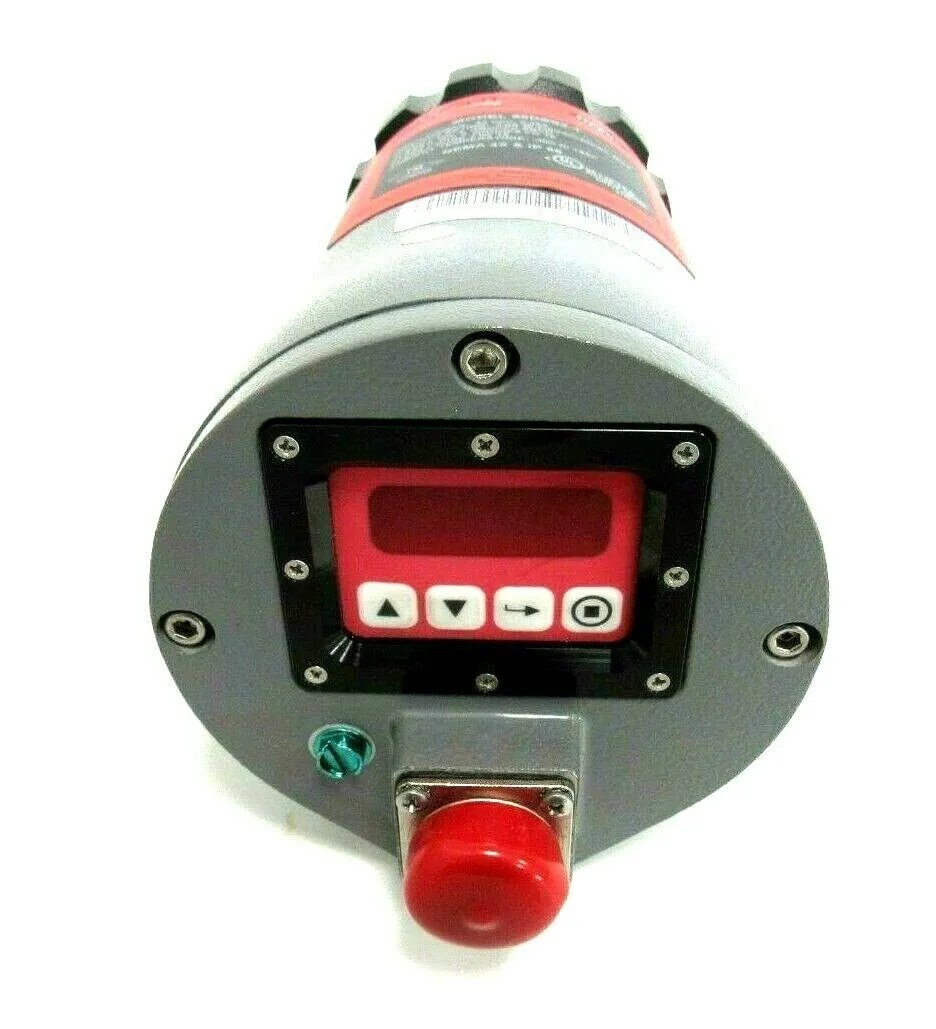
Fireye produces a wide range of scanners designed for different fuels, burner configurations, and environments. While all detect flame and signal the burner safety control, each series offers unique capabilities matched to specific industrial needs.
Phoenix Series 2 (85UVF / 85IRF): Rugged scanners with advanced signal processing in explosion-proof options, available in UV and IR versions for hazardous locations that require ATEX or IECEx.
InSight Series 4 (95UVS4 / 95IRS4): Integrated flame detection, amplifier, and logic in one unit. On-board diagnostics and SIL capability for high-integrity safety systems.
InSight II (95DSS3 / 95DSS2): Dual UV/IR sensing for reliable detection in challenging or fluctuating flames. Multiple hazardous-location variants exist by suffix.
Legacy Hazardous-Location Scanners (45UV5, 45RM2): Proven designs with explosion-proof housings, ideal for retrofits or strict environmental protection needs.
Compact UV Series (UV7, UV90): Straightforward UV scanners used in moderate-duty applications, with CEX variants for flame-proof needs.
Key Certifications and What They Mean
ATEX and IECEx confirm suitability for explosive atmospheres. For scanners, this includes flameproof enclosures marked Ex db or non-sparking concepts for specific gas groups and temperature classes.
SIL (Safety Integrity Level) indicates the device’s proven ability to perform its safety function under defined conditions. SIL capability is vital in burner management systems tied to safety instrumented systems.
FM, UL, CSA, CE, UKCA are regional approvals that validate electrical safety and performance compliance. They are often required by insurers and inspectors.
Hazardous Location Ratings such as Class I Division 1 or Division 2 define where the device may be installed relative to explosive gases or dust. NEMA/IP Ratings define enclosure protection against dust and water. Some models also offer marine-grade materials for coastal or offshore use.
| Series / Model Range | Detection Type | Sample Part Numbers | Hazardous-Location / Enclosure Markings | Agency Approvals / Notes |
|---|---|---|---|---|
| InSight 95DSS2 (Expanded) | Dual UV/IR | 95DSS2-1 | NEMA 4XIP66Class I, Div 2, Groups A–DClass II, Div 2, Groups F–G | UL c/USFM No ATEX on -1 variant |
| InSight 95DSS2 (Expanded, cable) | Dual UV/IR | 95DSS2-1CG | NEMA 4XIP66Class I, Div 2 | UL c/USFM No ATEX |
| InSight 95DSS2 “E” (Zone 2) | Dual UV/IR | 95DSS2E-1 | II 3G/D Ex nA IIC T6NEMA 4XIP66 | CE Zone-2 compliant; typically no UL/FM on E variant |
| InSight 95DSS2 (Flame-proof) | Dual UV/IR | 95DSS2-1CEX | ATEX Ex d IIC T6IP66 | CEX housing provides flame-proof ATEX; CE depends on exact “E-CEX” variant |
| InSight II 95DSS3 (standard) | Dual UV/IR | 95DSS3-1 | II 3G Ex ec nC IIC T4 GcII 3D Ex tc IIIC T135°C DcNEMA 4XIP66/IP67 | UL c/USFMCEUKCAEAC/InMetro |
| InSight II 95DSS3 (flame-proof) | Dual UV/IR | 95DSS3-1CEX, 95DSS3-1WICEX, 95DSS3-1CEX-2, 95DSS3-1CEXSS | II 2G Ex db IIC T6II 2D Ex tb IIIC T85°CIP66 | Global approvals set typically includes CE and regional marks |
| InSight Series 4 (standard) | UV or IR | 95UVS4-1, 95IRS4-1, 95UVS4-2, 95IRS4-2 | II 3G Ex ic ec nC IIC T5 GcII 3D Ex tc IIIC T70°C Dc | UL c/USFMCEEACInMetro SIL capable |
| InSight Series 4 (flame-proof) | UV or IR | 95UVS4-1CEX, 95IRS4-1CEX (and -2CEX) | ATEX/IECEx Ex db IIC (T6/T5/T4)Ex tb IIICIP66 | Used where Ex db flame-proof is required |
| Phoenix Series 2 (QD variants) | UV or IR | 85UVF1A-1QD, 85IRF1A-1QD | Class I, Div 2II 3G Ex ic ec nC IIC T4 Gc | FMUL c/USCEUKCA per model listings |
| Phoenix Series 2 (CEX) | UV or IR | 85UVF1-1CEX, 85IRF1-1CEX | Ex II 2G Ex db IIC T6Ex II 2D Ex tb IIIC T85°CIP66 | Flame-proof CEX housing for Zone 1/21 applications |
| 45UV5 (standard) | UV (self-check) | 45UV5-1007, 45UV5-1105 | Industrial enclosure; non-EX variants | ULFMCE per datasheets |
| 45UV5 (CEX / EX) | UV (self-check) | 45UV5-1007CEX, 45UV5-1009CEX | EEx d IIC T6IP66 and/or NEMA 7 Class I/II Div 1/2 | Explosion-proof for gas and dust groups as specified |
| 45RM2 (EX) | IR | 45RM2-1000EX | NEMA 7Class I, Div 1 & 2, Groups C & DClass II, Div 1 & 2, Groups E/F/G | Explosion-proof solid-state scanner |
| UV7 (standard) | UV | UV7A4, UV7R4, UV7SC | Industrial enclosure | UL ListedFM Approved |
| UV7 (CEX) | UV | UV7A4-1-CEX | ATEX Ex d flame-proof housing | ATEX housing variant of UV7 series |
| UV90L (standard) | UV (90°) | UV90L-1 | Standard enclosure | Use CEX variant below for ATEX |
| UV90AL-CEX | UV (90°) | UV90AL-CEX | Ex d IIC T6 ATEX | Angle-head UV scanner with flame-proof housing |
| 45FS1 (Flame Simulator) | UV/IR simulator | 45FS1-1000 | Laboratory/field test device | ULFMCE approvals for test equipment |
Tip: Certifications can vary within a series. Always verify the exact suffix and housing code on the data sheet before submittals or purchase.
Why Certifications Matter and How They Are Made, Measured, and Tested
Scanner certifications validate design safety and performance under defined conditions. Agencies and notified bodies evaluate the product design, materials, and safety analyses, then perform environmental and electrical tests. These include hazardous-area protection methods, thermal testing to confirm temperature classes, ingress protection testing for IP ratings, impact and mechanical strength evaluation, electrical safety checks, and functional safety analysis for SIL capability. Manufacturers undergo periodic audits and submit samples for re-testing to maintain approvals.
Selecting the Right Fireye Scanner for Your Application
Match certifications to your hazardous area. Choose models that exactly match your classification, for example Zone 1 Ex db or Class I Division 2. A 95DSS3-1CEX is suited for Zone 1 requirements, while a 95DSS2-1 fits Class I Division 2.
Consider environmental protection. For dust, water spray, or washdown, look for IP66 or IP67 and NEMA 4X enclosures. Coastal sites may require marine-grade materials.
Verify functional safety requirements. If your SIS requires SIL capability, select a scanner with published safety data and follow the safety manual for integration.
Align detection to the flame. UV is ideal for clean gas flames. IR or dual UV/IR improves reliability with fluctuating flames or mixed fuels.
Confirm local codes and insurer requirements. NFPA, EN, and insurance standards may dictate minimum markings. Validate labels and documentation before installation.
Conclusion and Call-to-Action
Fireye scanners cover a broad set of certifications for industrial environments. Selecting the correct unit means aligning the model’s certified capabilities with your site’s classification, environmental exposure, and safety needs. TCI Supply stocks ATEX flame-proof, SIL-capable, and hazardous-location variants and can help confirm compliance for your region and application.
View Fireye Flame Scanners at TCI Supply
FAQ: Fireye Flame Scanner Certifications
What does ATEX certification mean for a Fireye flame scanner?
ATEX certification confirms suitability for explosive atmospheres under EU Directive 2014/34/EU. Depending on the model, this may be a flame-proof Ex db enclosure or a non-sparking concept with defined gas groups and temperature classes. Only specific variants carry ATEX, for example 95DSS3-1CEX or 85UVF1-1CEX.
Do all Fireye scanners have SIL certification?
No. SIL capability is provided on select models that include functional safety documentation. Check the series safety manual before specifying for a safety instrumented system.
What is the difference between Class I Division 1 and Division 2?
Division 1 covers areas where explosive gases are present during normal operation. Division 2 covers areas where hazardous gases are present only under abnormal conditions. Choose a scanner with markings that match the installation area.
Are CE and UKCA certifications the same?
CE is required in the European Union. UKCA applies to Great Britain. Many scanners include both marks, but always verify the label on the exact SKU.
How often do certifications need to be renewed?
Approvals remain valid as long as the product is manufactured to the approved design. Agencies typically require periodic factory audits and may request sample re-testing. Design changes that affect compliance require re-certification.
Can two scanners in the same series have different certifications?
Yes. Certifications vary by suffix and enclosure. A standard model may be Zone 2 or Div 2, while a CEX variant of the same series may be Ex db for Zone 1.
Where can I find the certification markings on my scanner?
Look on the nameplate or the housing. You will see approval logos, hazardous location class or zone, gas and dust groups, temperature class, and IP or NEMA ratings.
Disclaimer: Always consult the latest Fireye data sheets and safety manuals for your exact part number before specifying or installing equipment.