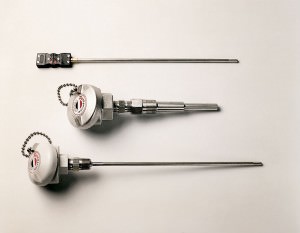
Need Expert Pyromation Sourcing?
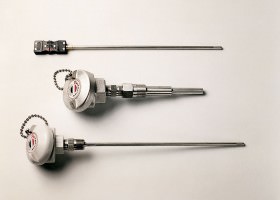
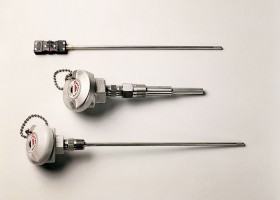
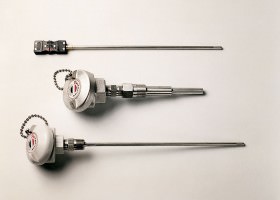
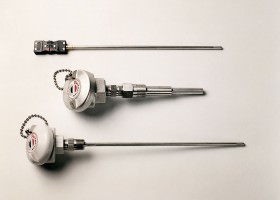
Pyromation industrial thermocouples, RTDs, and thermowells provide the precise thermal metrics required to monitor hazardous process loops, sanitary environments, and high-heat exhaust stacks. Because these critical temperature assemblies rely on highly specific arrangements of calibration types, sheath diameters, immersion lengths, and connection heads, sourcing an exact replacement profile requires true technical precision. Contact our dedicated instrumentation sourcing team today to locate your specific temperature sensor, protective thermowell, or drop-in hardware element.
Contact Us
Pyromation equipment part strings follow a structured positional coding method that determines the element type, physical dimensions, fitting options, and terminal housing structures. Review the engineering breakdowns below to translate your active sensor tags.
Industrial Spring-Loaded RTD Assembly
• R5T185L483-003-00 — Spring-Loaded Platinum RTD Probe
R5 (Spring-Loaded RTD Element Style with Connection Head Base) • T (100-ohm Platinum Sensing Element Class with a 0.00385 temperature coefficient) • 185 (Standard Simplex Class A Accuracy Rating Option) • L (Lead Wire Insulation Configuration) • 483 (Dimensional Profile: 48 denotes a 1/4″ outside sheath diameter, 3 identifies 316 Stainless Steel metallurgy) • -003 (3-Inch Physical Probe Insertion Length Index) • -00 (Standard General-Purpose Terminal Block Termination Suffix)
Pyromation Products Catalog FAQ
Maintaining proper process heat tracking loops and accurate calibration records requires a clear understanding of sensor types, thermowells, and drift tolerances. Review our tailored hardware answers below.
What industries most commonly use products from the Pyromation thermocouples & RTDs?
Industries such as chemical processing, pharmaceuticals, food and beverage, oil and gas, and power generation commonly utilize Pyromation thermocouples for accurate temperature measurement and control. The specific types of thermocouples vary by industry due to the distinct temperature ranges they operate in:
- Type K thermocouples are widely used in chemical processing and power generation for their high temperature range (up to 1260°C) and robustness in oxidizing environments.
- Type J thermocouples are popular in food and beverage and pharmaceutical applications where moderate temperatures (up to 760°C) are typical, providing reliable and economical measurement.
- Type T thermocouples, suited for low-temperature ranges (up to 370°C), are ideal for cryogenic applications and low-temperature pharmaceutical processes due to their accuracy in colder environments.
- Type N thermocouples serve oil and gas industries with their high resistance to oxidation and stability at temperatures up to 1300°C, ideal for demanding and corrosive settings.
What are the available calibration options for products in the Pyromation thermocouples & RTDs?
Pyromation offers several calibration options for their thermocouples and RTDs at various temperatures to ensure accuracy and compliance with industry standards. Available calibration types include point calibration, which verifies temperature accuracy at specific points; span calibration, ensuring accuracy across a range of temperatures; and comparison calibration, where sensors are compared against a known standard in a controlled environment. Additionally, Pyromation provides NIST-traceable calibration certificates for thermocouples and RTDs, ensuring compliance with national standards, which is essential for industries with stringent temperature measurement requirements, such as pharmaceuticals and aerospace.
What are the key features of Pyromation RTDs for industrial temperature measurement?
Pyromation RTDs (Resistance Temperature Detectors) are designed for high accuracy and stability in industrial temperature measurement applications. Key features include platinum-based sensing elements, which provide consistent, precise measurements over a broad temperature range, and rugged construction, often with stainless steel sheaths and optional thermowells, to protect against harsh environmental conditions. Pyromation RTDs also offer customizable configurations, allowing users to select specific temperature ranges, lead-wire options, and calibration tolerances tailored to their industry requirements, making them versatile for applications in pharmaceuticals, food processing, and energy production.
What makes Pyromation thermocouples ideal for precise temperature control?
Pyromation thermocouples are ideal for precise temperature control due to their fast response times, wide temperature range, and durability in harsh environments. Constructed with high-quality materials, these thermocouples maintain accuracy and stability across extreme temperatures, ensuring reliable data in industrial applications. Additionally, Pyromation offers various thermocouple types (such as Type K, J, and N) tailored to specific conditions, allowing for customized solutions that enhance measurement precision in industries like chemical processing, power generation, and food production.
How do Pyromation temperature sensors differ from other temperature brands in terms of accuracy?
Pyromation temperature sensors, particularly their RTDs and thermocouples, are known for their exceptional accuracy and reliability compared to many other temperature sensors on the market. Pyromation RTDs use high-purity platinum elements that provide highly accurate readings with a minimal margin of error, even over long-term use, making them well-suited for applications requiring stringent control, like pharmaceuticals and precision manufacturing. Their thermocouples also incorporate quality materials and construction, ensuring stable performance over a wide range of temperatures, which reduces drift and improves accuracy in challenging industrial environments.
What are Pyromation thermowells used for in temperature sensing applications?
Pyromation thermowells are protective devices used in temperature sensing applications to shield sensors, such as thermocouples and RTDs, from harsh process environments. They are designed to withstand corrosive, high-pressure, and high-temperature conditions, ensuring the sensor’s durability and prolonging its lifespan. Thermowells also allow for easy sensor maintenance and replacement without interrupting the process, making them ideal for industries like chemical processing, oil and gas, and power generation, where continuous, reliable temperature measurement is essential.
Ready to locate your replacement Pyromation component?
TCI Supply handles a deep, active inventory of current and obsolete Pyromation thermocouples, RTDs, connection heads, transmitters, and drilled thermowells. Contact our technical team directly at 1-800-755-2883 or email an image of your equipment data plate to secure a fast, competitive quote.